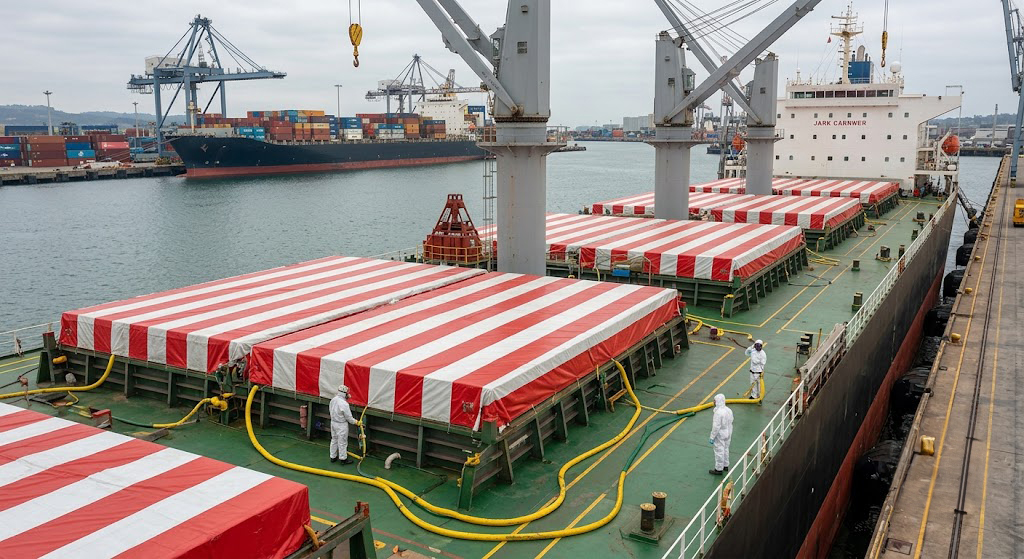
The massive wheels of global trade turn thanks to steel boxes, namely "containers," that endlessly circulate among all ports, trucks, and trains in the world. From one end of the world to the other, everything you can imagine, from textile products to electronics, from furniture to foodstuffs, is transported inside these enclosed boxes. However, it is not only these commercial products that travel intercontinentally. Wooden pallets, packaging materials, or the product itself loaded inside the containers carry unwanted pests, woodworms, and microorganisms with them. The biggest nightmare of importing countries is the entry of a foreign (invasive) pest species that will destroy the local ecosystem via cargo coming from outside. The only international standard to stop this global biological threat is "Container Fumigation". In this article, we will discuss the importance of container fumigation in export and import, legal obligations (ISPM-15), and application methods.
Why Is Fumigation Mandatory in Containers?
A container is like an enclosed steel oven that heats up under the sun and gets humid on the ocean. This environment is a perfect incubator for pest eggs hidden inside the container to hatch and multiply during the weeks-long sea voyage.
- Wooden Packaging and Pallet Danger: Millions of wooden pallets and crates are used to secure products in exports. Very dangerous forest pests like the "Asian Longhorned Beetle" or termites can hide inside these untreated woods. These insects spread to the forests of the country they reach, causing billions of dollars in ecological devastation.
- Food and Agricultural Products: A warehouse moth starting to breed in a container full of coffee beans, cocoa, hazelnuts, dried figs, or rice can turn the cargo completely into garbage by the end of a weeks-long journey.
That is why almost all countries, especially Australia, New Zealand, the USA, and European Union countries, stipulate that containers arriving at their borders must be fumigated (gassed) and certified.
What is the ISPM-15 Standard?
ISPM-15 (International Standard for Phytosanitary Measures No. 15) is a global standard developed to prevent harmful organisms that wooden packaging materials (pallets, crates) used in international trade can carry. According to this rule, any untreated wooden packaging material thicker than 6 mm must be subjected to either Heat Treatment (HT) or fumigation with approved gases like Methyl Bromide (MB) / Sulfuryl Fluoride, and an internationally valid seal must be stamped on it. A container loaded with non-fumigated pallets is absolutely not allowed through the destination port and is returned to the sender country with a heavy fine.
How is Container Fumigation Applied?
Container fumigation (gassing process) is applied in the quarantine area right before the doors are closed after the products are loaded into the container or when the cargo arrives at the port.
- Ensuring Container Sealing: The ventilation holes of the container are closed from the outside with special sealing tapes. Door gaskets are checked; after the doors are closed, the door joints are also isolated with thick tapes. The gas introduced inside must not leak out in any way.
- Application of Gas: The appropriate gas (mostly Phosphine or Sulfuryl Fluoride) is selected according to the type of cargo. The gas is placed inside the container in tablet form or pumped from the outside via hoses. The gas penetrates through product packaging and pallet fibers, suffocating and destroying even the insects and eggs in the most hidden places.
- Waiting (Quarantine) Period: Depending on the type of gas and the ambient temperature, the container is kept closed for 24 to 72 hours. "DANGER TOXIC GAS" warning labels are affixed to the doors and seal locations of the container.
- Ventilation (Degassing): At the end of the period, authorized personnel arrive with masks and open the doors. The gas is allowed to dissipate completely. When it is confirmed by measuring with special detectors that the gas level has dropped to zero, a "Gas Free" report is issued, and the container is shipped safely.
Conclusion
In international trade, time and reputation are the most valuable elements that must not be lost. A quarantine rejection at border gates or ports means your container is sent back, your products are spoiled, and you lose your customer. Container fumigation is a passport that guarantees the smooth delivery of your cargo in accordance with international norms (ISPM-15). By working with a professional fumigation company authorized by the Ministry of Agriculture, applying the procedures flawlessly, and issuing internationally valid certificates, you can ensure your exports pass safely through customs gates.