Factories and production facilities are massive organisms consisting of thousands of moving parts, complex machinery systems, kilometers-long pipelines, and ventilation ducts. Especially in food factories producing bakery products like flour, pasta, and biscuits, or in textile facilities producing yarn and fabric, pests (especially mealworms and moths) nest in the most inaccessible points of the production lines, in the hot zones inside the motor components, and in pipe bends. It is impossible to solve such a chronic pest infestation that has penetrated to the capillaries of the factory with routine daily exterminations (spray or gel). Dismantling, cleaning, and reinstalling the machines takes months. The only technological and definitive solution to "biologically reset" the entire production line and completely rid it of pests is "Factory Fumigation". In this article, we will examine the details of the full-volume gassing operation applied in factories.
Situations Making Fumigation Mandatory in Factories
A factory's decision to stop production and opt for fumigation usually occurs in the following critical situations:
- Chronic Infestation (Endemic Pest Problem): The insect population inside the facility has increased so much that live insects or larvae are now emerging from inside the packages of the final manufactured product. This means the brand is facing the risk of being recalled from the market.
- Audit Failures: Detection of insect activity well above acceptable limits inside machines and throughout the facility during food safety and hygiene audits conducted by authorities such as BRC, IFS, AIB, or the Ministry of Agriculture.
- Facility Transfer or Renovation: The purchase of an old factory by a new management or the need to completely sterilize a facility that has been closed for a long time before reopening it for production.
How is Factory Fumigation (Structural Fumigation) Done?
The process of gassing an entire factory is one of the largest and most complex operations in the environmental health sector. It requires a preparation phase that takes days:
- Preparation of the Facility: Production is completely stopped before the procedure. All open foods or sensitive chemicals that could react are taken out of the factory. The covers of the machines, electrical panels, and ventilation ducts are left open (so the gas can easily enter inside). All fire detectors and alarm systems inside the business are temporarily disabled so they don't misidentify the gas as smoke and trigger.
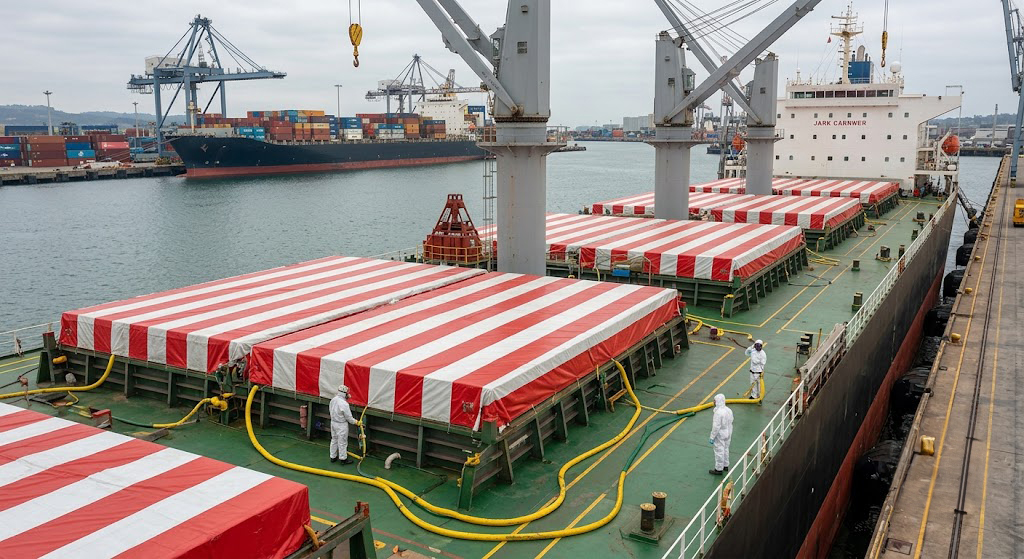
- Massive Isolation (Tent and Seal): If the structure of the factory is not suitable for sealing, the entire factory (yes, the whole building along with its roof) is completely wrapped from the outside with massive tarpaulins just like a gift package (Tent Fumigation). If the building is relatively new, only all doors, windows, and vents inside are closed with special foams (Tape and Seal).
- Releasing the Gas (Gassing): Depending on the volume of the factory, tons of Sulfuryl Fluoride or Phosphine gas are pumped into the building via special heaters and distributor pipes. The gas penetrates every cubic millimeter, from the floor of the factory to its roof, from the narrowest gears of the machines to the inside of the pipelines.
- Quarantine and Ventilation: The facility is kept closed for 48 to 72 hours. After it is confirmed through external measurements that the insects inside (including eggs) are 100% dead, the tarpaulins are opened. The gas is expelled using massive exhaust fans.
A Cost or a Salvation?
The cost of factory fumigation and the cessation of production for a few days may initially seem like a huge burden to factory managers. However, considering the loss of reputation suffered due to infested products, the cost of throwing away returned (rejected) products, and canceled international agreements, fumigation is actually a lifesaver that rescues the factory from bankruptcy. This operation, which resets the entire pest population at once without dismantling machines and without leaving residues, carries the production quality of your factory back to the top.