
Disinfection Services
Sector-specific disinfection for food plants, hotels, offices, pharmaceutical stores, factories and other sites: survey, treatment, contact-time briefing and records.
Definition
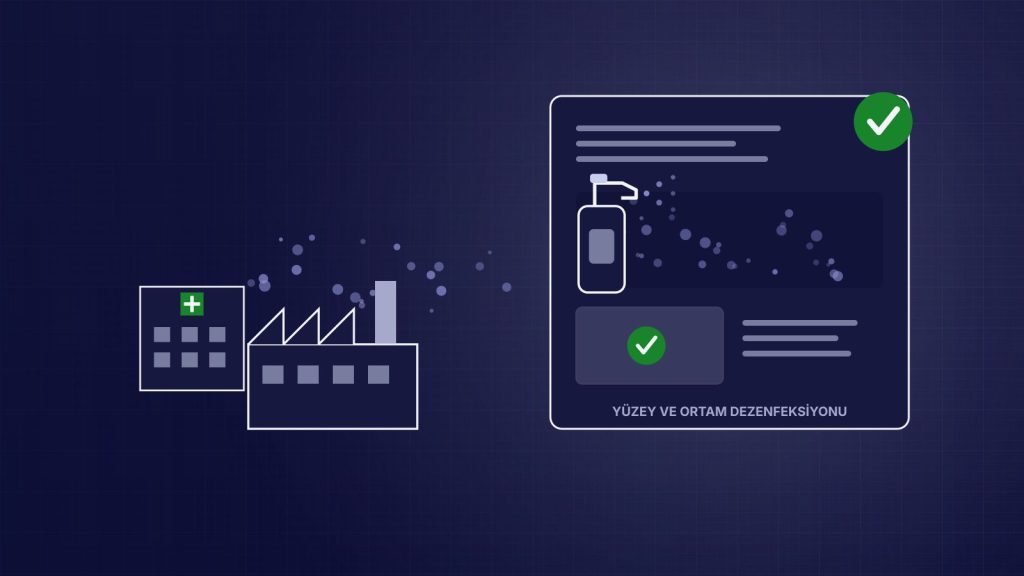
Disinfection is a treatment that aims to reduce the microbial load on surfaces and in enclosed areas, planned according to how the site is used and how sensitive it is. Microorganisms such as bacteria, viruses and fungi are considered, but the risk and need differ from site to site.
It is therefore planned per sector from the findings of an initial inspection, not from a generic template. Claims about results are made only when supported by measurement.
Scope
- Contact surfaces and frequently used areas
- Shared areas and technical spaces
- Pre-treatment preparation and access management
- Post-treatment briefing and records
- Assessing the need for follow-up checks
General method
The method is set according to site sensitivity, surface type, intensity of use and legal requirements. Product choice, surface suitability, contact time and ventilation are addressed in the treatment plan.
Protection of sensitive products and equipment, staff movement and access management are discussed before treatment.
Application areas
- Food production facilities
- Retail food premises
- Restaurants
- Hotels
- Offices and workplaces
- Organised industrial zones
- Educational institutions
- Construction sites
- Energy production plants
- Pharmaceutical stores and depots
- Ports
- Ships and yachts
- Factories
- Cosmetics and chemical plants
Target pests
- Microorganisms such as bacteria, viruses and fungi
- Microbial load that can accumulate on high-touch surfaces
- Contamination arising from external transfer, usage habits and storage arrangements
Process steps
- Initial inspection Entry routes, hiding places, moisture, waste, human traffic and product movement are assessed together.
- Risk and target analysis The target pest, the source of infestation and repeat-risk points are identified.
- Programme and method selection A treatment and monitoring programme suited to the sensitivity of the site and to legal requirements is written.
- Treatment Treatment is carried out by authorised personnel with products and methods in line with the plan.
- Monitoring Monitor, station and observation data are collected at regular intervals.
- Reporting Findings, trends and recommendations are turned into a written report and stored in the PMDP.
- Review The programme is updated according to results; preventive measures are proposed for repeat points.
Documents and reporting (PMDP)
- Visit report: date, areas inspected, findings and action taken.
- Monitor and station records with activity observations.
- Trend and repeat-point analysis; corrective and preventive recommendations.
- Photographic site notes and a mapped equipment layout.
- All records kept digitally in the PMDP and an archive ready for audits.
Preparation and safety
- Treatment hours are planned around how the site is used; out-of-hours work is possible.
- Access and covering arrangements for sensitive goods such as food, medicines, cosmetics and equipment are agreed beforehand.
- After treatment, users are informed (contact time, ventilation, when the area can be used again).
- Product and method selection takes account of worker health and environmental safety according to site sensitivity.
- To reduce repeat risk, improvements are proposed at points such as door thresholds, drains, behind shelving and loading lines.
Sector-specific initial inspection areas
- Food production and retail: shelving, open-product areas, cold-cabinet handles, storage areas, customer contact points
- Offices and workplaces: desk surfaces, meeting rooms, keyboard-mouse sets, kitchenettes, shared door handles
- Educational institutions: classrooms, canteen and dining hall, gym, shuttle waiting area, play areas
- Construction sites: dormitories, dining halls, shower-WC and office containers, service areas
- Energy plants: control rooms, security points, canteen, shift rooms, surroundings of critical equipment
- Industrial zones: multiple building entrances, dining halls, service areas, shared offices, loading points
Site-specific parameters assessed
- Contact surfaces, intensity of use and operational flow
- Treatment hours and when the area is in use
- Product choice, surface suitability, contact time and ventilation
- Odour control and post-treatment user briefing
- Site sensitivity, equipment and product safety, legal requirements
- Need for uninterrupted operation and access procedure
- Need for follow-up checks and signs to watch
Repeat-risk points
- Door thresholds
- Drains
- Behind shelving
- Loading lines
- Technical spaces and open-area connections
Site safety
- The applicator uses personal protective equipment; mask, gloves and goggles are chosen to suit the application.
- A chemical spill kit and emergency contact details are kept in the vehicle.
- Enclosed areas are not reopened until aerated.
- Waste packaging and contaminated material are not mixed into household waste.
Frequently asked questions
When is disinfection needed?
In hygiene-risk areas, before audits, after suspected contamination or as part of a regular programme.
Is disinfection the same as pest control?
No. Pest control targets insects and rodents; disinfection aims to reduce microbial load.
Which sectors do you serve?
Food production and retail, restaurants, hotels, offices, industrial zones, education, construction sites, energy, pharmaceutical stores, ports, ships and yachts, factories, cosmetics and chemical plants.
When can the area be used afterwards?
Contact time and ventilation advice are given after treatment; following them is advised.
Can it be done outside working hours?
Yes; it is planned according to when the area is used.
Is the result measured?
The need for measurement is discussed at the survey according to site and expectation; result claims are made only when supported by measurement.