
Hold and Store Fumigation
Fumigation of empty and loaded stores and holds: structure check, sealing, gas monitoring, aeration and records.
Definition
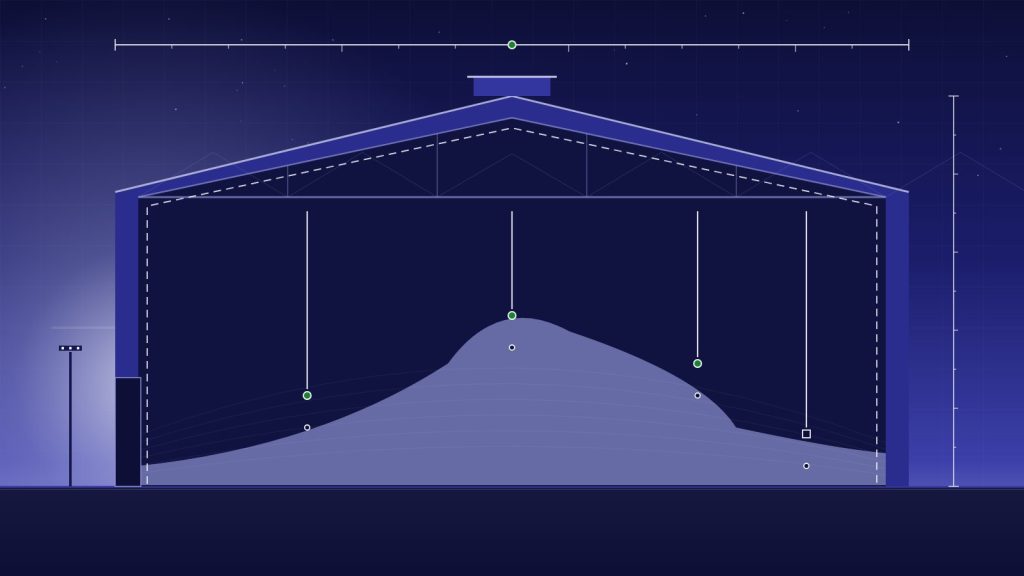
Store fumigation is a gas treatment of the enclosed volume of stores used for grain, products or raw materials. It can be done in an empty store (for the structure and residues) or in a loaded store (together with the product).
The structure of the store, its cracks, doors and ventilation gaps determine how well gas is retained.
Scope
- Empty store: structure and residual pests
- Loaded store: together with product
- Sealing check and repair advice
- Gas monitoring and aeration
General method
Fumigation is a treatment in which a licensed product in gas form is used inside a sealed or sealable volume to reach pests in all life stages. Because the gas can penetrate the commodity and the structure, it can work in places that surface treatments cannot reach.
The method is planned after a site survey according to the target pest, the commodity, the volume, how well the structure can be sealed and the weather. Product choice, exposure time and concentration are not published on this page; they are set in the treatment plan and under the product's licence conditions.
Application areas
- Grain and feed stores
- Factory raw-material stores
- Port and logistics stores
- Agricultural cooperative stores
Target pests
- Stored-product insects (grain and flour beetles, weevils, moth species)
- Foreign insects carried with goods that may be of quarantine concern
- Insects that can occur in packaging, pallets and timber
- Rodents where this is judged necessary
Process steps
- Request and survey The type of site, volume, commodity and target pest are established; an on-site survey is carried out where needed.
- Risk and target pest assessment Sealability of the structure, nearby occupancy, commodity sensitivity and weather are assessed together.
- Treatment plan and permissions Method, crew, safety measures and notifications to the relevant authority or site owner are set out in a written plan.
- Site preparation and sealing Entrances and exits are marked, sealing is checked and gas monitoring points are defined.
- Gas application The treatment is carried out according to the plan by authorised, trained personnel.
- Exposure and monitoring The site is kept under control during exposure; gas monitoring and surrounding safety are recorded.
- Aeration and safe-entry clearance Aeration is completed, safe entry is confirmed by measurement and warning signs are removed.
- Reporting and record hand-over Treatment records are prepared and handed to the requester; records can also be kept in the PMDP.
Documents and reporting (PMDP)
- Treatment record: date, site, volume, target pest and applicator details.
- Gas monitoring and aeration records with the safe-entry clearance.
- Photographic site notes and any deviation or warning records.
- Digital record in the PMDP with traceability over time.
- Which authority issues the phytosanitary or fumigation certificate needed for export or import, and under what conditions, varies by country and commodity; that document is issued by the competent authority.
Preparation and safety
- Treatments are carried out only by authorised, trained personnel; protective equipment and a gas monitor are kept on hand.
- Staff, visitors and neighbouring businesses are informed in advance; entry bans and warning signs are applied.
- Preparation for living things (people, animals, plants), sensitive goods such as food and medicines, and electronic equipment is settled during the survey.
- Wind, temperature and rain may affect timing; the plan is kept flexible accordingly.
- An emergency contact plan and first-response steps are shared with the crew before the treatment.
For an empty store
- Pests in cracks in walls, floors and ceilings are targeted.
- Cleaning and repair advice is given before product enters.
For a loaded store
- Product type and packaging are assessed for compatibility with the gas.
- Stack height and voids affect gas distribution.
- Product removal afterwards depends on safe-entry clearance.
Preparation steps for the requesting party
Safety in fumigation depends on the requester's preparation as much as on the applicator. The steps below are a general framework; a site-specific list is given at the survey and with the treatment record.
- Have the treatment carried out only by a firm and personnel holding a valid application permit; ask to see the documents.
- No one may enter during the date and time window written on the record and warning signs; this applies to pets as well as people.
- The site must not be used until aeration is complete and the authorised firm gives explicit clearance; the opening time on the record is not clearance by itself.
- No flammable material or smoking near the treatment site; the safety distance is given at the survey.
- In enclosed volumes, switch off power, remove light bulbs and take electronics such as TVs and air conditioners out of the area.
- Repair water leaks, cracks and gaps; the better the seal, the more controlled the treatment.
- Remove food and personal-care items from the site; anything left behind is not used even after clearance and is disposed of.
- In room and cabin type volumes, leave clothing, bedding and luggage open; wash and air these items before reuse.
- You can ask the applicator for the safety data sheet of the fumigant used.
- Report anything unusual you notice during or after the treatment to the applicator immediately.
What a fumigation record contains
A bilingual (Turkish-English) fumigation record is prepared for every treatment. Its fields are listed below; no product, quantity, dose or volume value is shared on this page.
- Date; the firm commissioning the treatment and the place of treatment
- Type of fumigation (under tarpaulin, room, container, etc.)
- Type, quantity and packaging details of the fumigant used
- Treated volume, fumigation temperature and dose fields (values appear on the record)
- Closing and opening date and time
- Purpose of the treatment and target pest
- Name and licence details of the authorised person who performs the treatment (agricultural engineer)
- The company representative's undertaking on safety measures and keeping people away from the site
- Signature field confirming that the requesting party accepts these preparation steps
Frequently asked questions
Is empty-store fumigation necessary?
If pests may be sheltering in the structure it can be done before product enters. Need is judged on survey and monitoring findings.
Is the product damaged in a loaded store?
For suitable products and packaging the treatment is run under control; suitability is judged at the survey.
Do cracks in the store affect fumigation?
Yes; if sealing is poor the gas cannot be retained. Cracks and gaps are closed or supported with temporary sheeting.
How long does it take?
It depends on volume and conditions; the schedule is given after the survey.
What is the difference between a silo and a store?
A silo is a vertical, enclosed storage unit; a store is a wider horizontal volume. The plans differ.
When can I use the site after fumigation?
Even when the opening date and time on the record arrive, do not use the site until the authorised applicator has completed the checks and given clearance. Clearance follows aeration and confirmation of safe entry.
What is a fumigation record and why does it matter?
The record documents where, how and why the treatment was done, the closing and opening times and the authorised applicator. It gives the requester traceability and documents acceptance of the preparation steps.
What happens to food or personal-care items left in the site?
These items should be removed beforehand. Anything left behind should not be used even after the site is reopened and should be disposed of.
What do I need to prepare before fumigation as a customer?
Core steps are clearing the site, isolating power and electronics, repairing leaks and cracks, removing food and personal-care items and observing the entry ban. A site-specific list is given at the survey.