
Crawling Pest Control
Survey, treatment and monitoring against cockroaches, ants, fleas and snails. For residential and commercial areas.
Definition
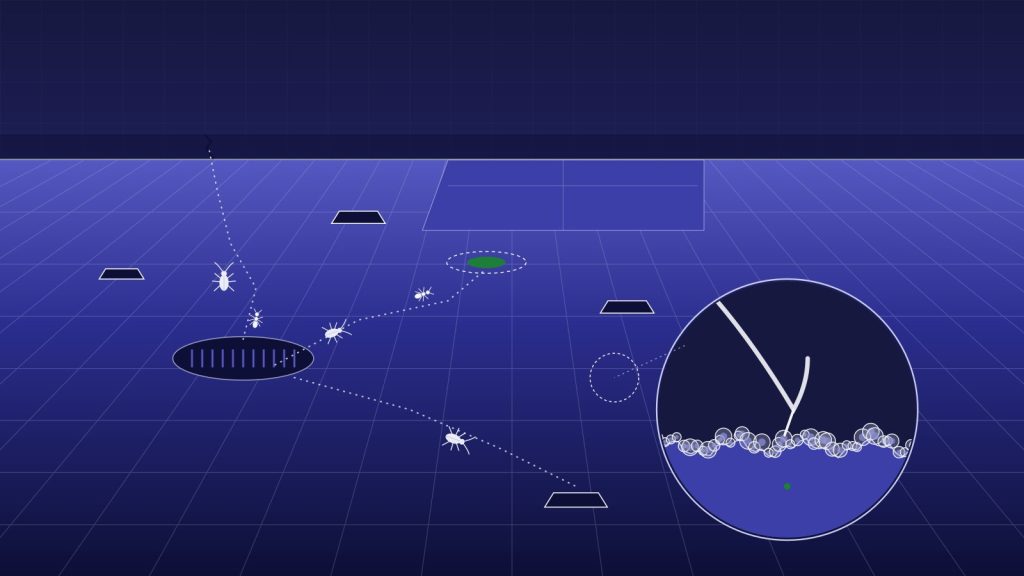
Crawling pest control identifies the harbourage, feeding and transit points of ground-moving pests such as cockroaches, ants and fleas and manages them through targeted treatment and prevention.
Moisture, food residue, waste arrangements and entry routes are the main factors that determine where these pests settle.
Scope
- Survey and identification of harbourage
- Targeted treatment and monitors
- Entry-route and moisture advice
- Follow-up visit and reporting
General method
Treatment follows the principle of prevention and monitoring first, with targeted intervention where needed. Product and method are chosen after the survey according to the target, the sensitivity of the site and legal requirements.
Product names, doses and licence details are not given on this page; they appear in the treatment plan and under the relevant product conditions.
Application areas
- Kitchens and eating areas
- Bathrooms, drains and service voids
- Storage and archive areas
- Hotel rooms and shared areas
- Gardens and outdoor areas
Target pests
- Cockroaches
- Ants
- Fleas and ticks
- Bed bugs and similar pests
- Snails and slugs
Process steps
- Initial inspection Entry routes, hiding places, moisture, waste, human traffic and product movement are assessed together.
- Risk and target analysis The target pest, the source of infestation and repeat-risk points are identified.
- Programme and method selection A treatment and monitoring programme suited to the sensitivity of the site and to legal requirements is written.
- Treatment Treatment is carried out by authorised personnel with products and methods in line with the plan.
- Monitoring Monitor, station and observation data are collected at regular intervals.
- Reporting Findings, trends and recommendations are turned into a written report and stored in the PMDP.
- Review The programme is updated according to results; preventive measures are proposed for repeat points.
Documents and reporting (PMDP)
- Visit report: date, areas inspected, findings and action taken.
- Monitor and station records with activity observations.
- Trend and repeat-point analysis; corrective and preventive recommendations.
- Photographic site notes and a mapped equipment layout.
- All records kept digitally in the PMDP and an archive ready for audits.
Preparation and safety
- Treatment hours are planned around how the site is used; out-of-hours work is possible.
- Access and covering arrangements for sensitive goods such as food, medicines, cosmetics and equipment are agreed beforehand.
- After treatment, users are informed (contact time, ventilation, when the area can be used again).
- Product and method selection takes account of worker health and environmental safety according to site sensitivity.
- To reduce repeat risk, improvements are proposed at points such as door thresholds, drains, behind shelving and loading lines.
Snails and damp-area pests
Snails and slugs concentrate in damp, shaded places and can damage crops around gardens and greenhouses. At the survey the moisture source and travel routes are identified and the method is chosen according to site use.
Field application principles
- Liquid chemicals are not sprayed on food or product-contact surfaces; the solution starts with monitors, sanitation and structural sealing.
- Where needed (behind motors, under panels, in cracks), gel or bait with no contamination risk is preferred; gel is never applied to food.
- Glue monitors are placed at warm, damp points such as under counters, behind ovens and behind cooler motors.
- Food left in lockers, grease build-up in kitchen drains and open waste containers feed the problem directly; hygiene checks are done regularly.
- Pallets are stacked away from walls and checked at packaging intake; pests often enter on pallets or packaging.
Frequently asked questions
How many visits does cockroach treatment need?
It varies with infestation level and site; a follow-up visit is planned.
Why do ants come back?
They can return if food and moisture sources and entry routes persist; advice is given for these points.
Is gel application safe?
Application points are planned in places out of reach of children and pets.
Is a flea problem related to pets?
Often yes; home, animal and surroundings are handled together. Treating the animal needs a vet's advice.
Is snail control done?
Yes; especially in gardens, greenhouses and damp outdoor areas, planned according to site conditions.
Can I clean after treatment?
Contact and waiting times are notified in writing after treatment; following them is advised.
Why is non-toxic monitoring preferred indoors?
To reduce contamination risk in food, pharma and packaging areas, glue or pheromone monitors are used indoors; bait stations concentrate on the outdoor line according to risk analysis.