
Flying Pest Control
Survey, device layout and monitoring against flies, mosquitoes and moths. For kitchens, production and storage areas.
Definition
Flying pest control identifies the sources, entry routes and hotspots of flies, mosquitoes, moths and similar flying insects and manages them with devices and methods.
It is done by assessing placement, light, air flow and product exposure together.
Scope
- Survey and source identification
- Device placement and servicing
- Barrier advice at entry points
- Monitoring and reporting
General method
Treatment follows the principle of prevention and monitoring first, with targeted intervention where needed. Product and method are chosen after the survey according to the target, the sensitivity of the site and legal requirements.
Product names, doses and licence details are not given on this page; they appear in the treatment plan and under the relevant product conditions.
Application areas
- Kitchens and food-preparation areas
- Production and packing sections
- Warehouses and loading ramps
- Hotel, restaurant and café areas
- Outdoor areas and refuse surroundings
Target pests
- House flies and other flies
- Mosquitoes
- Fruit flies and drain flies
- Moth species
Process steps
- Initial inspection Entry routes, hiding places, moisture, waste, human traffic and product movement are assessed together.
- Risk and target analysis The target pest, the source of infestation and repeat-risk points are identified.
- Programme and method selection A treatment and monitoring programme suited to the sensitivity of the site and to legal requirements is written.
- Treatment Treatment is carried out by authorised personnel with products and methods in line with the plan.
- Monitoring Monitor, station and observation data are collected at regular intervals.
- Reporting Findings, trends and recommendations are turned into a written report and stored in the PMDP.
- Review The programme is updated according to results; preventive measures are proposed for repeat points.
Documents and reporting (PMDP)
- Visit report: date, areas inspected, findings and action taken.
- Monitor and station records with activity observations.
- Trend and repeat-point analysis; corrective and preventive recommendations.
- Photographic site notes and a mapped equipment layout.
- All records kept digitally in the PMDP and an archive ready for audits.
Preparation and safety
- Treatment hours are planned around how the site is used; out-of-hours work is possible.
- Access and covering arrangements for sensitive goods such as food, medicines, cosmetics and equipment are agreed beforehand.
- After treatment, users are informed (contact time, ventilation, when the area can be used again).
- Product and method selection takes account of worker health and environmental safety according to site sensitivity.
- To reduce repeat risk, improvements are proposed at points such as door thresholds, drains, behind shelving and loading lines.
Points considered in device placement
- Devices should not sit over food or open product
- Direct light and air-flow conditions
- Accessibility for servicing
- Staff and visitor safety
EFK device placement rules
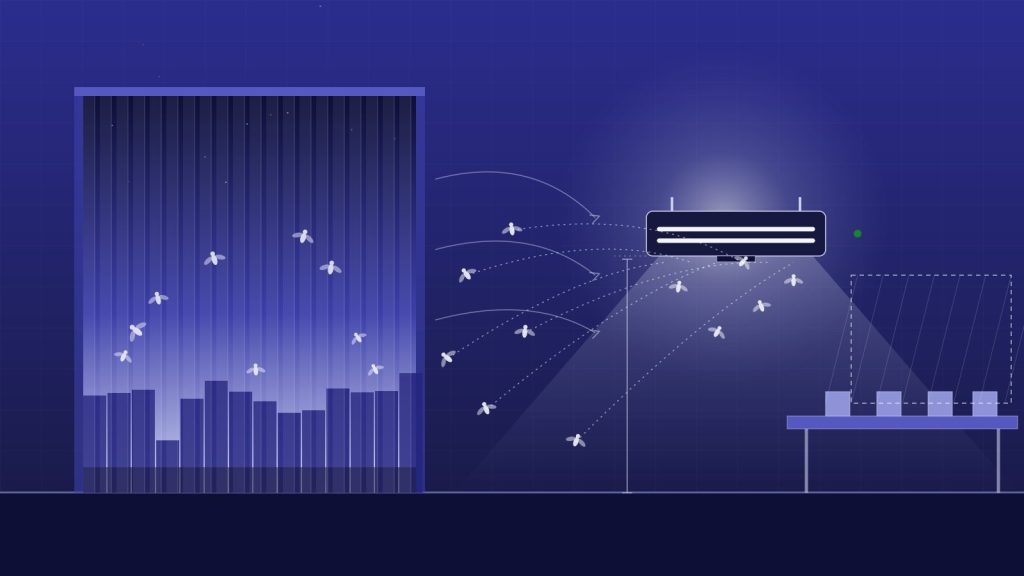
- The device must not be visible from outside or placed directly opposite a door; otherwise it draws outside flies in.
- It is not hung above production or packaging lines; dead fly fragments could fall into product.
- Devices are mounted at roughly 1.5-2 metres to suit flight height.
- Glue-board types with shatter-resistant lamp protection are preferred for food and pharma areas.
- UV lamps still emit light but lose attraction over time; lamps are replaced at least once a year.
- Flies on glue boards are counted by species (house fly, drain fly, moth, etc.) and entered in the report.
- Physical barriers (insect screens, air curtains) come before the device; the device alone is not the solution.
Frequently asked questions
Where are fly catchers placed?
Near entry routes and away from open-product areas; placement is set at the survey.
How often do devices need servicing?
According to use and setting; the service schedule is written into the plan.
Where do the flies come from?
Sources such as refuse, drains, moisture, open doors and outdoor areas are assessed; reducing the source is advised.
Is mosquito treatment done outdoors?
It is assessed according to site conditions, with environmental and neighbour sensitivity considered.
Are devices alone enough?
Usually not; they work better together with source reduction, door/window measures and monitoring.
Is a report provided?
Catch observations and recommendations are included in the visit report and can be stored in the PMDP.
Where should an EFK device be installed?
It should be mounted at roughly 1.5-2 metres at points not visible from outside, not directly opposite a door and not above a production line.