
Pharaoh ant: signs, risks and control approach
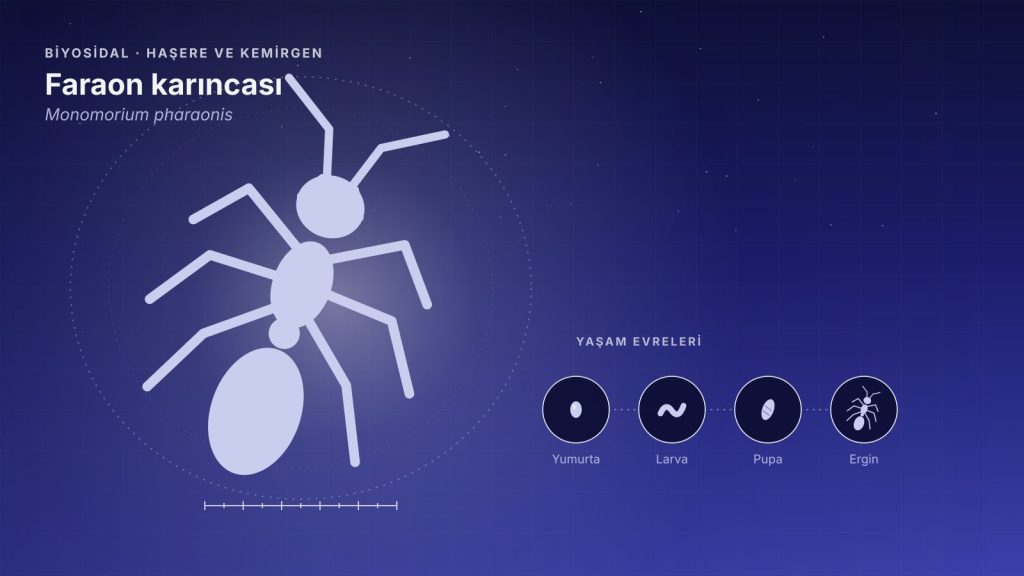
Biocidal (pests / rodents)Monomorium pharaonis
At a glance
Pharaoh ant (Monomorium pharaonis) is a common pest handled under biocidal pest control. Tiny tropical ant that nests inside heated buildings, hospitals and kitchens.
This page is general information; a site inspection and expert assessment are needed for your facility.
How to identify it
- About 2 mm, yellowish-brown with a darker abdomen; two-segmented waist and a three-segmented antenna club.
- Trails lead to food residues, sweets and fats.
- Multiple queens and rapidly increasing nests.
Signs on site
- Tiny ants trailing along wall voids, electrical panels and warm equipment
- Appearance in sterile areas near dressings and medical devices
- Colonies splitting into new nests when disturbed (budding)
Life cycle and growth
Colonies hold many queens and split into new nests when disturbed. In heated buildings they remain active year-round.
Timings vary with temperature and humidity; rely on your own monitoring data rather than fixed numbers.
Risk table
- Healthcare: Contact with wounds and sterile areas in hospitals and care homes.
- Food: Contamination in kitchens and production.
- Persistence: Wrong spraying fragments colonies and enlarges the problem.
Sectors where it is common
Related sector pages:
- Hospitals and healthcare → /en/sectors/hospitals-healthcare/
- Hotels and HORECA → /en/sectors/hotels-horeca/
- Food production → /en/sectors/food-production/
IPM approach
IPM combines monitoring, source removal, exclusion and targeted intervention instead of relying on a single treatment.
Biocidal products are applied only as licensed products by authorised applicators in line with labels and regulations.
- Avoid sprays; use slow-acting gel baits and monitoring.
- Cut off food and water; remove sweet and fatty waste.
- Seal wall voids and pipe penetrations.
- Reassess bait placement at stations and cabinets for colony tracking.
Prevention checklist
- Check entry points regularly: door gaps, pipe and cable penetrations, ventilation.
- Keep food, waste and moisture sources closed and clean.
- Apply goods-in checks to incoming product, packaging and pallets.
- Record findings with dates using stations or monitors.
- Teach staff how to report a sighting and whom to call.
Records and audits
Audits and customer reviews expect finding date and place, action taken, product or method used, responsible person and closure evidence.
Pak İş keeps these in service reports and the PMDP customer portal; audit results still depend on the site system and certification body, and no guarantee is given.
When to call an expert
When monitoring thresholds are exceeded, live pests are found in product or sensitive areas, complaints recur, or a documented programme is needed before an audit.
Frequently asked questions
Why are sprays not recommended?
Sprays can fragment colonies and create more nests; bait-based programmes are more suitable.
Is there a special risk in hospitals?
Yes, because of access to sterile and patient-care areas; fast, traceable intervention is required.
Is the result guaranteed?
No. This page does not promise outcomes; the approach depends on site conditions, entry points and hygiene practices.