
Tick: signs, risks and control approach
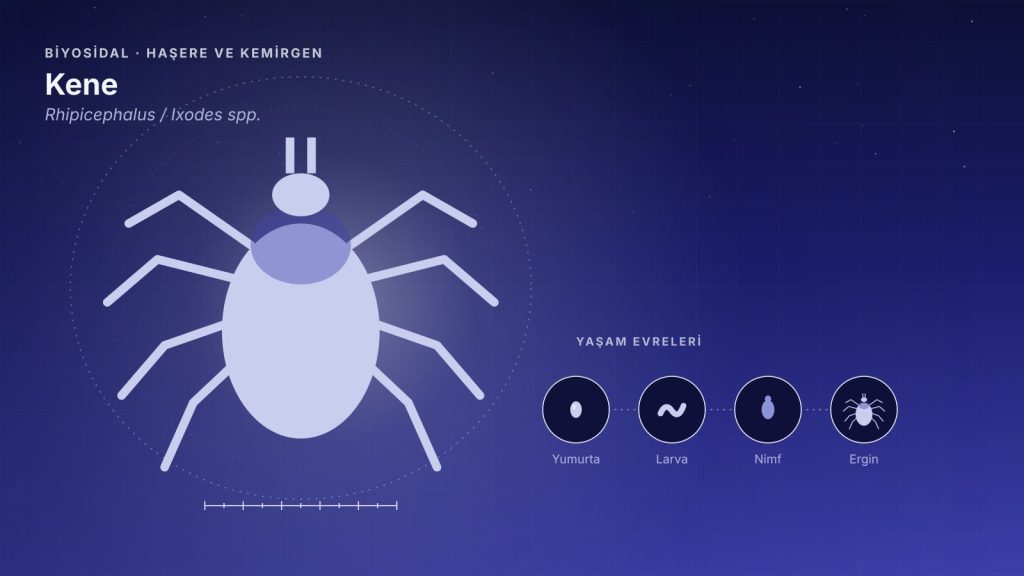
Biocidal (pests / rodents)Rhipicephalus / Ixodes spp.
At a glance
Tick (Rhipicephalus / Ixodes spp.) is a common pest handled under biocidal pest control. Blood-feeding arachnid associated with green areas, animals and outdoor work sites.
This page is general information; a site inspection and expert assessment are needed for your facility.
How to identify it
- An eight-legged arachnid (not an insect), 2–5 mm before feeding, swelling afterwards.
- Hard ticks have a dorsal shield; soft ticks a leathery body.
- Waits in grassland, bushes and animal resting areas.
Signs on site
- Attached tick on animals or staff
- Seasonal increase around gardens and pasture
- Density in shelters and barns
Life cycle and growth
Egg, larva, nymph and adult stages; may change host at each stage. Activity is high in spring and summer.
Timings vary with temperature and humidity; rely on your own monitoring data rather than fixed numbers.
Risk table
- Health: Some species can carry disease; follow regional health authority alerts.
- Outdoor work: Occupational risk for agriculture, forestry and park staff.
- Pets: Health issues in animals.
Sectors where it is common
Related sector pages:
- Grain and agriculture → /en/sectors/grain-agriculture/
- Public institutions → /en/sectors/public-institutions/
IPM approach
IPM combines monitoring, source removal, exclusion and targeted intervention instead of relying on a single treatment.
Biocidal products are applied only as licensed products by authorised applicators in line with labels and regulations.
- Maintain pasture, shrubs and fence lines; create open cut areas.
- Regular checks at animal resting points and veterinary care.
- Training staff on tick checks and protection.
- Area treatment, when needed, is planned with an authorised applicator.
Prevention checklist
- Check entry points regularly: door gaps, pipe and cable penetrations, ventilation.
- Keep food, waste and moisture sources closed and clean.
- Apply goods-in checks to incoming product, packaging and pallets.
- Record findings with dates using stations or monitors.
- Teach staff how to report a sighting and whom to call.
Records and audits
Audits and customer reviews expect finding date and place, action taken, product or method used, responsible person and closure evidence.
Pak İş keeps these in service reports and the PMDP customer portal; audit results still depend on the site system and certification body, and no guarantee is given.
When to call an expert
When monitoring thresholds are exceeded, live pests are found in product or sensitive areas, complaints recur, or a documented programme is needed before an audit.
Frequently asked questions
What if I find a tick?
Remove it using an appropriate method per health authority advice; seek medical advice if in doubt.
How are ticks reduced in gardens?
Lawn and shrub care, cleaning along fences and tree bases and managing animal pathways.
Is the result guaranteed?
No. This page does not promise outcomes; the approach depends on site conditions, entry points and hygiene practices.