
Flea: signs, risks and control approach
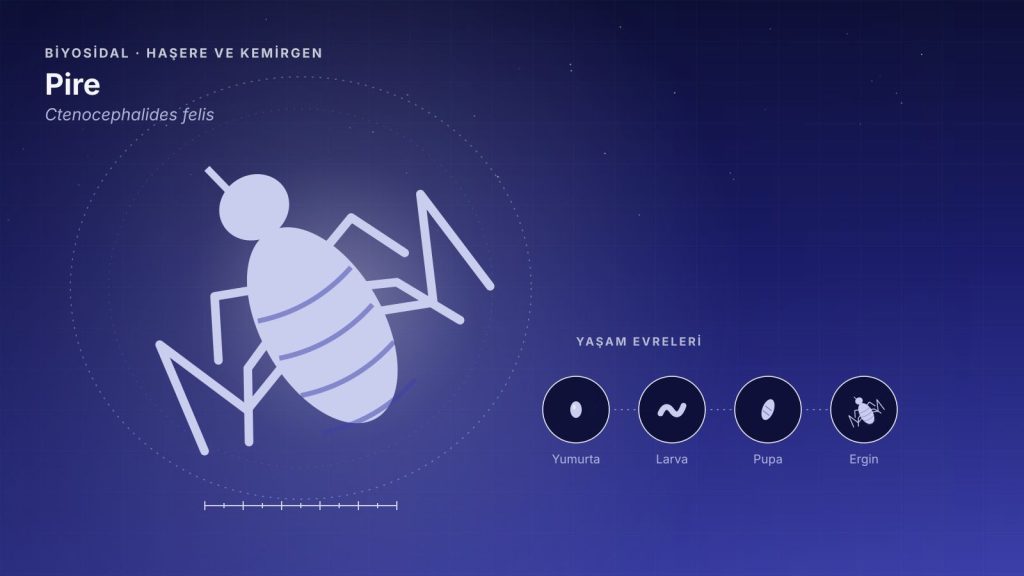
Biocidal (pests / rodents)Ctenocephalides felis
At a glance
Flea (Ctenocephalides felis) is a common pest handled under biocidal pest control. Small jumping parasite found with pets, warehouses and neglected spaces.
This page is general information; a site inspection and expert assessment are needed for your facility.
How to identify it
- 1–3 mm, laterally flattened, brown; strong hind legs for jumping.
- Found on pets, in carpets and floor cracks.
- Dry white debris (flea dirt) in animal coats.
Signs on site
- Clusters of bites around ankles
- Small jumping insects in animal bedding and carpet
- Sudden emergence in long-closed premises
Life cycle and growth
Eggs and larvae develop in carpets, floor cracks and bedding. The pupal stage can wait for vibration, giving sudden emergence when entering an empty home.
Timings vary with temperature and humidity; rely on your own monitoring data rather than fixed numbers.
Risk table
- Health: Bites, allergy and secondary issues in pets.
- Warehouses and offices: Problems where animals are present or premises abandoned.
- Homes: Sudden heavy emergence after moving in.
Sectors where it is common
Related sector pages:
- Logistics and warehousing → /en/sectors/logistics-warehousing/
- Public institutions → /en/sectors/public-institutions/
- Hotels and HORECA → /en/sectors/hotels-horeca/
IPM approach
IPM combines monitoring, source removal, exclusion and targeted intervention instead of relying on a single treatment.
Biocidal products are applied only as licensed products by authorised applicators in line with labels and regulations.
- Vet-supervised pet care.
- Vacuum and heat treatment for carpets, floors and bedding.
- Area treatment with re-inspection planned for eggs and pupae.
- Check animal entry points and bin areas.
Prevention checklist
- Check entry points regularly: door gaps, pipe and cable penetrations, ventilation.
- Keep food, waste and moisture sources closed and clean.
- Apply goods-in checks to incoming product, packaging and pallets.
- Record findings with dates using stations or monitors.
- Teach staff how to report a sighting and whom to call.
Records and audits
Audits and customer reviews expect finding date and place, action taken, product or method used, responsible person and closure evidence.
Pak İş keeps these in service reports and the PMDP customer portal; audit results still depend on the site system and certification body, and no guarantee is given.
When to call an expert
When monitoring thresholds are exceeded, live pests are found in product or sensitive areas, complaints recur, or a documented programme is needed before an audit.
Frequently asked questions
Why do they return after cleaning?
The pupal stage is resistant; re-inspection is needed for new emergence.
Can fleas occur without pets?
Yes, in places with rodents or stray animals.
Is the result guaranteed?
No. This page does not promise outcomes; the approach depends on site conditions, entry points and hygiene practices.